
Search Sanilac County Traffic Court Records
Traffic cases open in the 73A District Court, and the public index for that court lives on MiCOURT. The tool covers civil infraction tickets, parking and equipment cases, misdemeanor traffic, and the first stage of many operating-while-intoxicated matters. A public search shows the citation or case number, the charge, hearing dates, the plea or disposition, the fine and costs, the running balance, and any failure-to-appear activity. It does not post document images, so the online screen is an index rather than a full file copy.
Have the basics ready before you start. The citation number printed on the ticket gives the cleanest match, and a driver name works when the ticket is not handy. Date-of-birth searching is limited to secured, authorized users, so the general public relies on name and case number. The court entry point is Michigan's 73A District Court case search on MiCOURT.
- Open the 73A District Court search page and accept the MiCOURT Terms of Service.
- Confirm the court is set to D73A Sanilac, then choose a case-number or name search.
- Enter the citation or case number, or a last name and first name if the number is unknown.
- Review the case detail screen for the charge, court date, disposition, fine, and balance.
- Pay online, request a hearing, or contact the court for a certified copy as needed.
Which Courts Handle Sanilac County Traffic Cases
Nearly every driving case in the county begins at the 73A District Court in Sandusky. That court hears civil infractions, which include routine traffic and parking tickets, plus adult misdemeanor traffic offenses punishable by up to one year. It also runs preliminary examinations for felony cases. A first-stage operating-while-intoxicated charge is filed here as well, since the district court handles arraignment, bond, and early proceedings.
Serious cases can shift upward. When a traffic crime is charged as a felony, the district court holds the preliminary exam, and the case is then bound over to the 24th Circuit Court for trial-level proceedings. Routine infractions and misdemeanors stay in district court. The county clerk does not hold district traffic files, so a request for a driving-case copy goes to the district court room, not the clerk's vital-records counter.
| Court | Traffic Cases Handled | Address |
|---|---|---|
| 73A District Court | Civil infractions, traffic and parking tickets, misdemeanor traffic, first-stage OWI, felony preliminary exams | Room 302, 60 W. Sanilac, Sandusky, MI 48471 |
| 24th Circuit Court | Felony traffic crimes after bindover from district court | Room 303, 60 W. Sanilac, Sandusky, MI 48471 |
| District Magistrate | Civil infraction hearings and early district processing | 73A District Court, (810) 648-3424 |
Types of Sanilac County Traffic Cases
Traffic records in the county cover a wide range of driving matters. Most are civil infractions, which carry fines and costs rather than jail. Some are criminal, such as driving on a suspended license or operating while intoxicated, and those follow the misdemeanor or felony track. The record type shapes how the case moves and what shows in a search.
- Moving violations - Speeding, disobeying a signal, careless driving, and similar civil infractions that may add points to a driver record.
- Non-moving and equipment - Parking, registration, and equipment tickets that usually carry fines without driver points.
- Misdemeanor traffic - Suspended-license and reckless-driving charges handled as adult misdemeanors in district court.
- Operating while intoxicated - Alcohol and drug driving charges that begin in district court and can escalate.
- Commercial driving offenses - Citations against CDL holders, which carry added reporting and license consequences.
What Sanilac County Traffic Court Records Show
A traffic case screen reads like a compact history of the ticket. It starts with the citation or case number and the charge, then tracks the court date, the plea, and the final disposition. Financial fields follow, listing the fine, court costs, state costs, and the current balance. If a driver missed a date, the record can show a failure-to-appear entry and any warrant that resulted.
The fields below appear on public MiCOURT detail screens for district traffic cases. Actual labels vary by case type, and some financial lines only show once the court enters a judgment. Document images stay offline, so a certified copy still comes from the court.
| Field | What It Shows |
|---|---|
| Citation / Case Number | The court identifier for the ticket, best used for an exact search. |
| Charge / Statute | The violation charged and the offense date on the citation. |
| Court Date | The next hearing date, time, hearing type, and location. |
| Disposition | How the case ended, such as a responsible finding, guilty plea, or dismissal. |
| Fine and Costs | The fine, court costs, state costs, and any clearance fees assessed. |
| Balance / Warrant | The amount still owed and any failure-to-appear or bench-warrant activity. |
Sanilac County Citation vs Name Search
Both search methods work on MiCOURT, and the right one depends on what you hold. A citation or case number returns a single, exact match and skips the guesswork. A name search casts a wider net, which helps when the ticket is lost but can return several people who share a common surname. Michigan limits date-of-birth searching to secured, authorized users, so the public narrows results with a first name instead.
Watch the format when you type a case number, since a missing digit or wrong prefix returns nothing. For a name search, spell the surname as it appears on the license, and add the first name when the list runs long. The table below lists the district traffic search fields and how each behaves.
| Search Field | Type | Required | Notes / Format |
|---|---|---|---|
| Court | Route / dropdown | Yes | Set to D73A Sanilac District Court. |
| Case / ticket number | Text | Optional | Use the citation or case number printed on the ticket. |
| Last name | Text | Optional | Defendant or respondent surname. |
| First name | Text | Optional | Narrows a common-name search. |
| Date of birth | Date | Restricted | Secured, authorized users only. |
Pay or Contest a Sanilac Traffic Ticket
A driver has two basic paths after a citation. One is to admit responsibility and pay the fine and costs. The other is to contest the ticket and ask for a hearing before the deadline printed on the citation. The 73A District Court page links a Pay Online option and a Ticket Violation Instructions list of fines and costs, so many drivers settle a routine infraction without a courtroom visit.
Timing matters. Under Michigan Court Rule 1.110, financial obligations are due in full on the date of sentencing, so a driver who admits responsibility should be ready to clear the balance. Anyone who wants to fight the ticket must contact the court before the appearance or default deadline and request the correct hearing. The steps below outline the process, and the court phone line is (810) 648-3250.
- Read the citation for the charge, the amount due, and the response deadline.
- To pay, use the court's official Pay Online link or call the district court to confirm the total.
- To contest, call (810) 648-3250 before the deadline and ask for an informal or formal hearing.
- Enter a plea of responsible, not responsible, or the criminal equivalent as the case allows.
- Appear as ordered, and pay any fine and costs in full on the sentencing date.
Sanilac County Traffic Failure to Appear
Ignoring a ticket makes the problem larger. When a driver skips a required date or lets a balance sit, the court can add costs, order collection activity, and place a hold that blocks the license. A missed criminal-traffic appearance can trigger a bench warrant, which stays active until the driver resolves it with the court.
Getting out from under a hold usually means contacting the district court first. Paying the balance or scheduling a new hearing can lift a failure-to-appear flag, though the exact steps depend on the case type. A separate matter is a driver-restoration petition, which is a 24th Circuit Court filing that carries a $175.00 fee. That petition is not the same as paying a routine ticket, and the county Sanilac County Clerk of Court lists it among the circuit filing fees.
Court Traffic Records vs State Driver Records
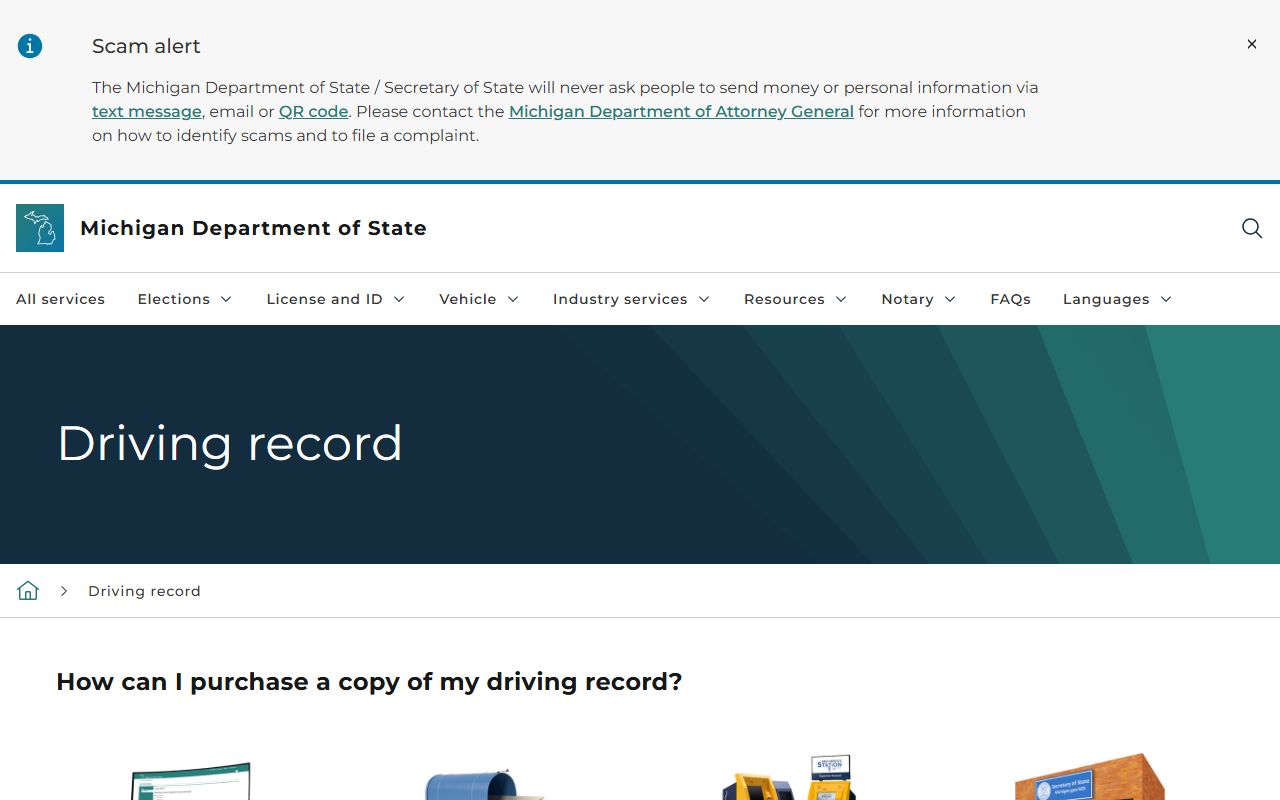
The single most useful thing to understand is that two separate files exist. The court traffic record is the case file the 73A District Court keeps, and it shows the citation, charge, plea, fine, and balance. The Michigan driver record is a state file the Secretary of State maintains, and it shows license status, convictions reported to the state, points, and any suspension or reinstatement history. A crash report is a third, distinct record held by law enforcement.
Because the files live in different offices, a correction in one does not automatically fix the other. The state driving-record page explains what appears on an official record and how a driver requests one. Michigan's Secretary of State driving-record page is the front door for that state file.
The comparison below lines up the three records side by side so a driver knows which office holds what and where a fix belongs.
| Point | Court Traffic Record | State Driver Record | Crash Report |
|---|---|---|---|
| Source | 73A District Court / MiCOURT D73A | Michigan Secretary of State | Sheriff or State Police |
| What it shows | Citation, charge, plea, disposition, fine, balance, warrant events | License status, reported convictions, points, suspensions, reinstatement | Crash facts, parties, vehicles, agency, diagram or narrative if releasable |
| Where to access | MiCOURT D73A search; district court for copies | SOS driving-record page, MiLogin e-Services, or a branch | Sheriff crash-report request under FOIA |
| How to correct | Contact the district court of record | Contact the Secretary of State | Contact the investigating agency |
Secretary of State Driver Records
A driver record is a state document, and the Secretary of State issues it. It compiles convictions the courts report, current license status, points, and any suspension or revocation. Employers, insurers, and drivers themselves order these records for different reasons, so access depends on who is asking and why. All driving records purchased at a branch office are certified, and online copies flow through the state's login system.
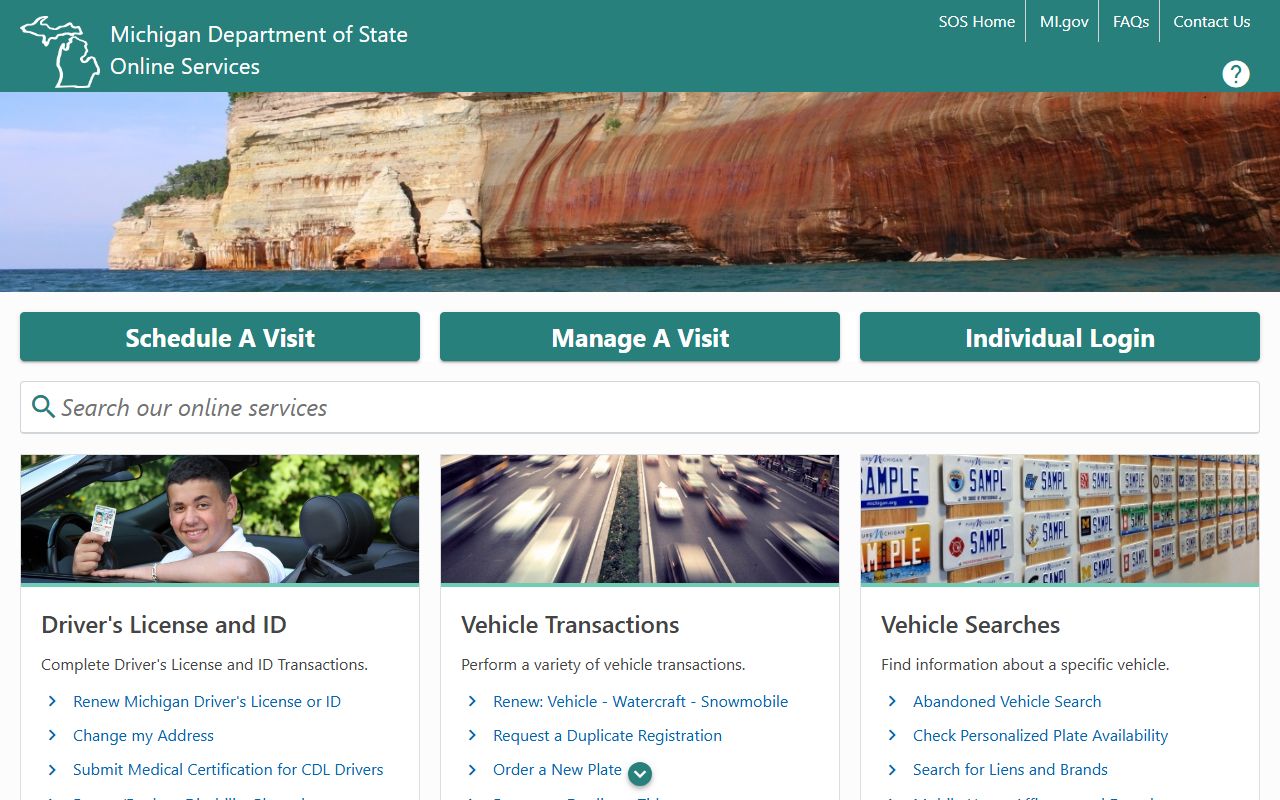
The state runs its driver services through an e-Services portal, where an authenticated user can view or buy a record. A MiLogin account is required for online access to a person's own record, and a paper form covers mail requests. The state's Michigan Department of State e-Services portal is where those online driver-record tasks begin.
The fields below outline what the state driver-record request asks for, whether online or on the mail-in form.
| Field Label | Type | Required | Notes / Format |
|---|---|---|---|
| MiLogin account | Login | Yes for own online record | Create or authenticate an account for an online certified copy. |
| Driver services section | Portal selection | Yes | Select the driving-record path within driver services. |
| Requestor information | Form fields | Yes for the mail form | The state form requires requestor identity details. |
| Record subject information | Form fields | Yes | Name, license or customer number, and other data the form requires. |
| Record type / use | Choice | Yes | Own record or another person's record, subject to permissible access. |
Note: a court set-aside can make a conviction nonpublic for court access, yet some traffic convictions can still appear on a Secretary of State driver record.
CDL and Driver Points in Sanilac County
Points are a state matter, not a court matter. When a district court reports a conviction, the Secretary of State applies any points to the driver record under Michigan law. The court file shows the disposition; the point total lives on the state record. That split is why a driver checks both files to understand the full picture after a ticket.
Commercial drivers face tighter rules. A CDL holder should treat even a minor citation with care, because reporting and license consequences can flow through state and interstate systems that do not apply to ordinary drivers. The point statute for Michigan driver records is MCL 257.320a, which sets how points attach to a driving record.
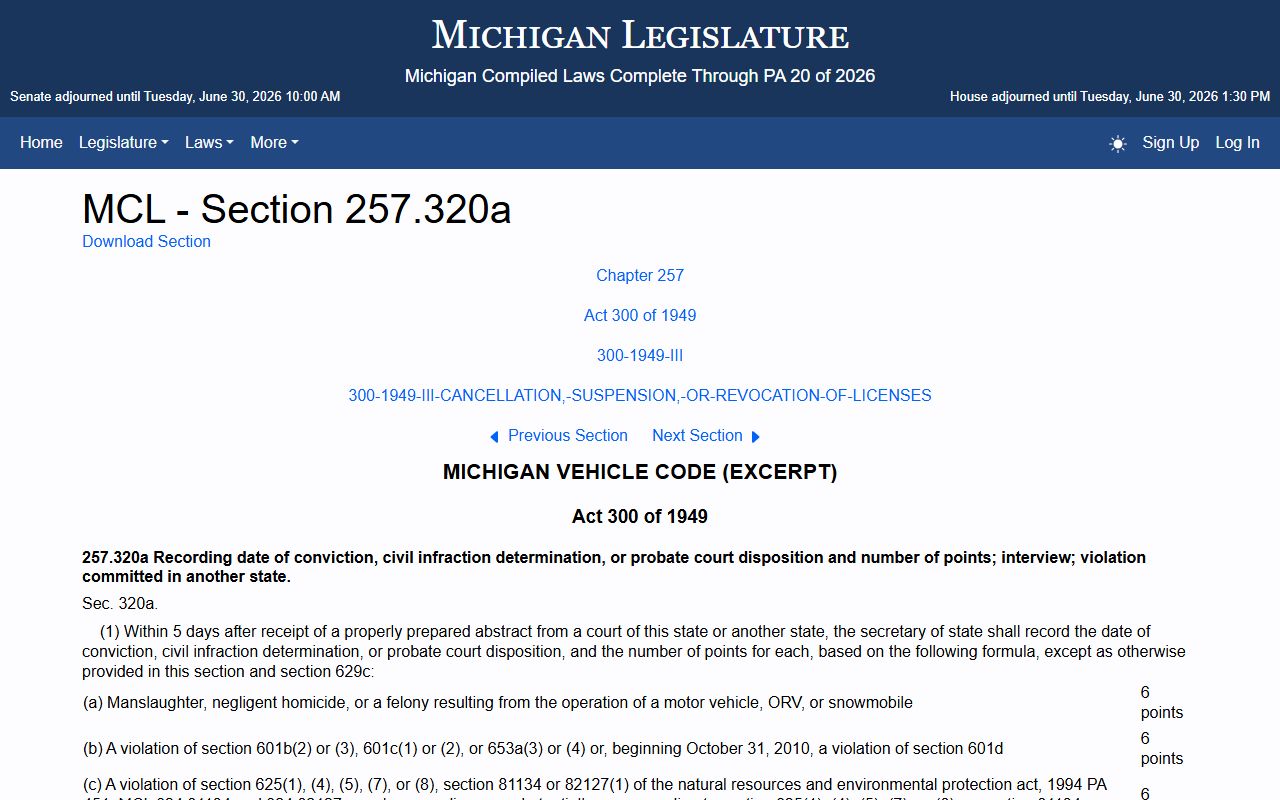
Reading the statute helps a driver see why a court disposition and a point count are two different things kept by two different offices.
Sanilac County DUI and Intoxicated Driving
Operating-while-intoxicated cases start in the 73A District Court, where arraignment, bond, and early proceedings take place. A first offense often stays at the district level, while a felony-level charge moves to the 24th Circuit Court after a preliminary exam. These cases carry criminal consequences beyond fines, so they are tracked as criminal matters rather than routine infractions.
For the full case file, charges, and sentencing detail, see the Sanilac County criminal court records page. That record covers the plea, disposition, probation, and any jail term tied to an intoxicated-driving conviction.
Sanilac County Traffic Set-Asides
Michigan allows eligible convictions to be set aside, which makes them nonpublic for ordinary access. Traffic offenses have their own treatment, and the rules are narrower than for many other cases. A set-aside does not erase a record from every government system, and some traffic convictions can remain visible on a state driver record even after the court handles the request.
Anyone considering this route should identify the exact court where the conviction occurred, gather the case number and disposition, and review the governing statutes before filing. The traffic set-aside provision is MCL 780.621c, which works alongside the main set-aside law. Because eligibility is fact-specific, the safest step is to confirm the process with the court or seek counsel rather than assume a conviction qualifies.
Sanilac County Crash Reports and Copy Fees
A crash report is not part of the district court traffic docket. It is a law-enforcement record, so a copy comes from the Sheriff's Records Bureau through a public-records request. Michigan's Freedom of Information Act governs that process, and the sheriff can charge permitted fees for the search and copy. The court file and the crash report answer different questions, so a driver often needs both.
Court copy fees are set by the office that holds the record. A certified copy of a traffic case comes from the 73A District Court, while a certified driving record comes from the Secretary of State. The table below lists documented fees tied to driving and traffic records. The FOIA law that covers crash-report requests is MCL 15.231.
| Item | Amount |
|---|---|
| Petition for driver's restoration (24th Circuit Court) | $175.00 |
| Traffic fines and costs | Set per violation; due in full at sentencing |
| Certified driving record | Certified at Secretary of State branch offices |
| Certified traffic case copy | Contact the 73A District Court for the current fee |
| Crash report copy | Sheriff FOIA fees for search and copying |